BOOKS & EDITED VOLUMES
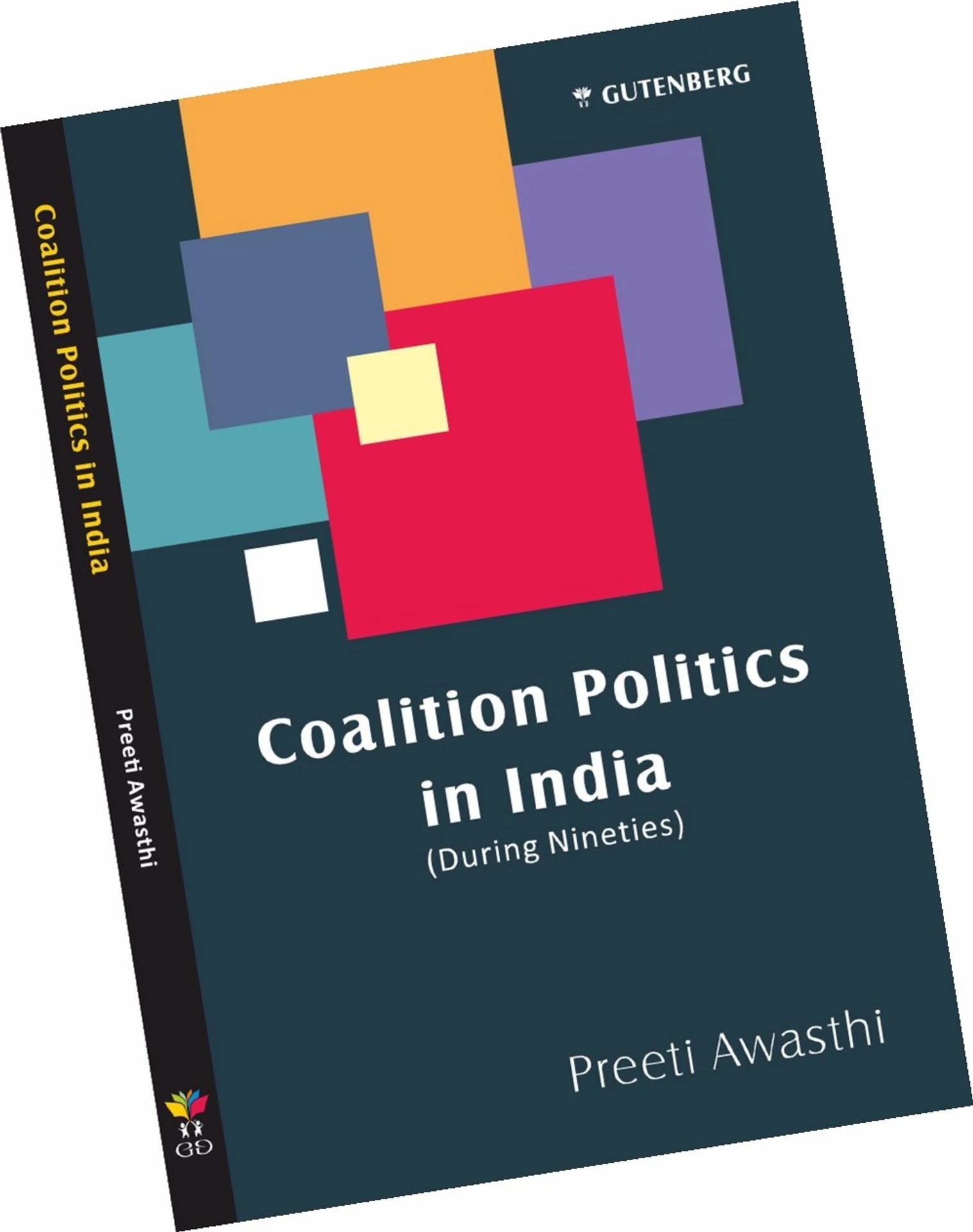
Coalition Politics in India (During Nineties)
Political parties are the cornerstone of representative democracy, providing an essential link between citizens and the institutions of governance. In India, the evolution of the party system has witnessed significant transformations, from the dominance of a single national party to the emergence of a competitive multiparty system in which regional political parties have acquired considerable political influence. This book examines the changing nature of Indian party politics, with particular emphasis on the growing role of regional political parties in national politics and the formation and functioning of coalition governments during the 1990s.
The book traces the historical evolution of political parties in India, beginning with the Congress-dominated political system of the 1950s and 1960s. It analyses the political developments following the 1967 General Elections, the emergence of opposition unity, the political consequences of the Emergency (1975–77), and the subsequent rise of coalition politics. The electoral developments of 1989 and the decline of one-party dominance further accelerated the growth of regional parties, transforming the structure and dynamics of Indian democracy.
A central argument of the study is that the rise of regional political parties was closely associated with the decline in the electoral dominance of national parties and the emergence of fractured mandates. During the 1990s, regional parties became indispensable partners in government formation at the Centre. The book examines the formation and functioning of coalition governments, including the United Front and National Democratic Alliance (NDA), and highlights the increasing significance of regional parties in national decision-making.
Particular attention is devoted to the bargaining strategies and negotiating power of coalition partners. It explores how regional parties influenced the distribution of ministerial portfolios, parliamentary leadership positions, legislative debates, controversial policy issues, the creation of new states, and the use of Article 356 of the Constitution. The study also investigates the inherent contradictions of coalition politics, including ideological differences, conflicting political interests, withdrawal of support, governmental instability, and frequent elections.
Organised into ten chapters, the book provides a comprehensive examination of the evolution of political parties, the factors responsible for the growth of regional parties, their electoral performance, their role in the formation and functioning of Union governments, and the challenges of political stability. Drawing upon primary and secondary sources, the research employs historical, analytical, and quantitative approaches, supported by tables and charts to examine electoral trends and political developments.
The book offers an important contribution to the understanding of Indian democracy, federal politics, political representation, and coalition governance. It demonstrates how regional political parties have transformed from state-level political actors into influential stakeholders in national politics. By examining the opportunities and limitations of coalition governments, the study provides valuable insights into the changing character of India's party system and the growing importance of regional political forces in shaping the country's democratic and political future.
← All Books